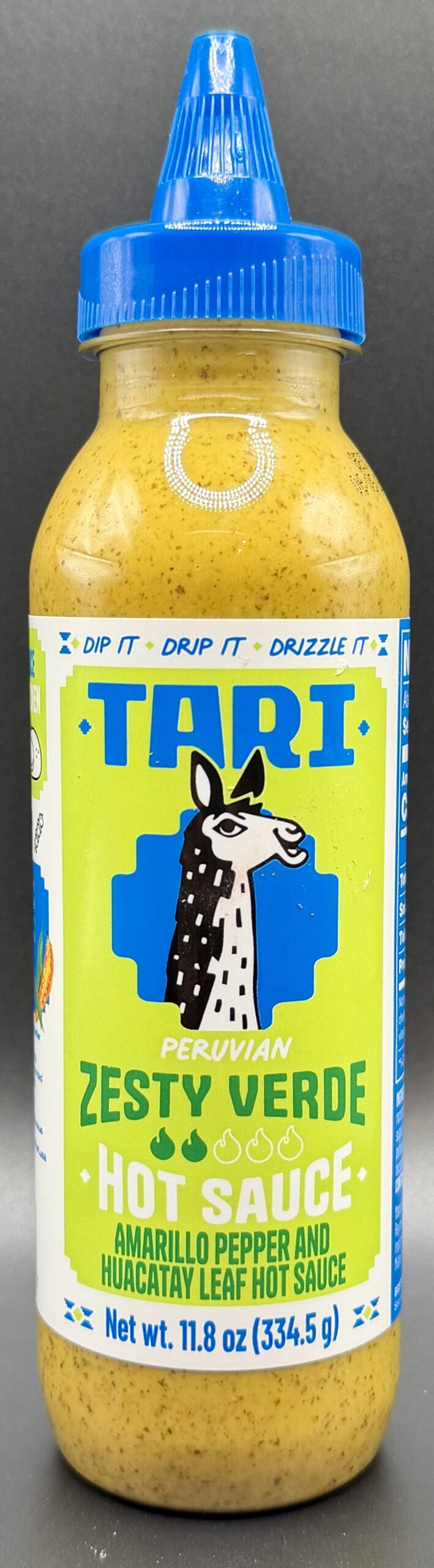
Tari – Zesty Verde Hot Sauce
Bitter: ⭐⭐✰✰✰
Salty: ⭐⭐⭐⭐✰
Sour/Tangy: ⭐⭐⭐✰✰
Sweet: ⭐⭐✰✰✰
Umami: ⭐⭐✰✰✰
Heat: ⭐✰✰✰✰✰✰✰✰✰
Quick Flavor Notes: Herbal, oily, tangy
Recommended: Conditional
Texture: Very thick, artificially thick
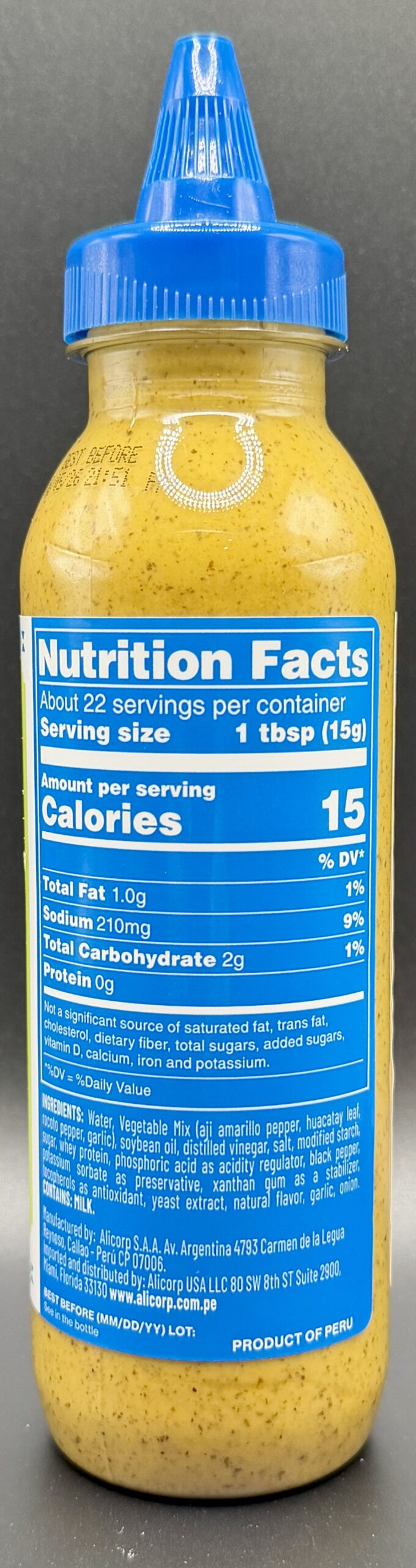
Ingredients: Water, Vegetable Mix (aji amarillo pepper, huacatay leaf, rocoto pepper, garlic), soybean oil, distilled vinegar, salt, modified starch, sugar, whey protein, phosphoric acid as acidity regulator, black pepper, potassium sorbate as preservative, xanthan gum as stabilizer, tocopherols as antioxidant, yeast extract, natural flavor, garlic, onion.
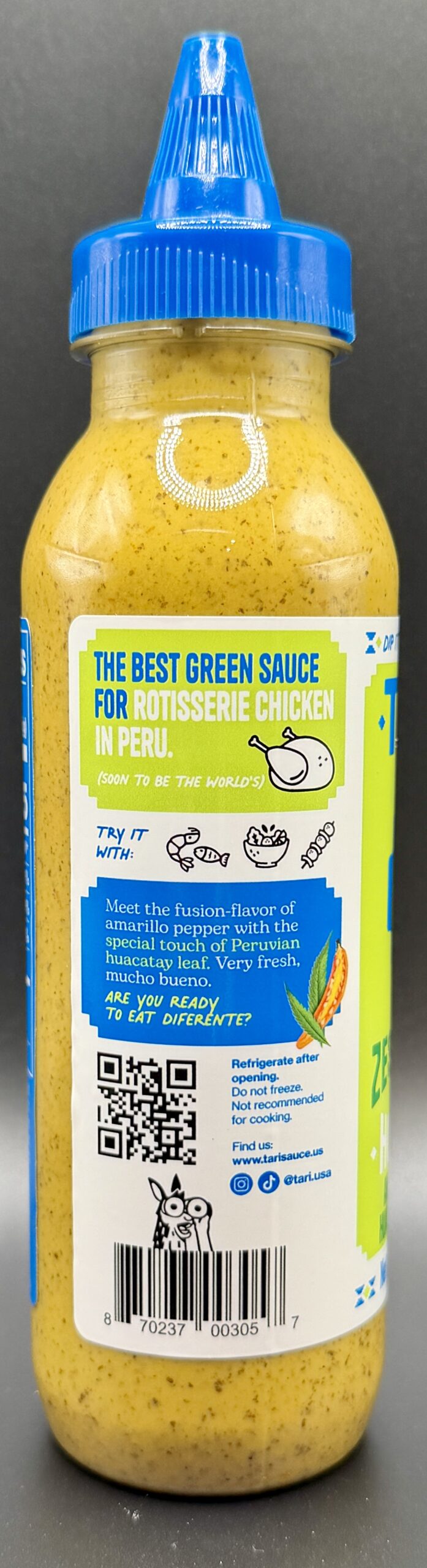
Tari Sauce comes from Peru an area where many believe chile peppers originated (along with the neighboring nations of Brazil and Bolivia). Peru is still home to many peppers that are uncommon to see outside of Peruvian cuisine. Tari Sauce was founded in 2012 and quickly became popular in the Peruvian market before eventually entering the US market in 2024. I’ve seen their sauces advertised before but always been hesitant due to the high oil content. When on a mission to Ollie’s Bargain Outlet for the purported super deals on Hot Ones sauces I stumbled upon these instead (unfortunately none of the Hot Ones sauces at my local Ollie’s). Since the best-by date was rapidly approaching on it I decided to jump it to the front of the line.
This sauce seems to be inspired by Peru’s salsa de huacatay. It’s a condiment used for dipping meats and potatoes in Peru in also in the Peruvian classic dish Ocopa. I was first turned on to it at a local Peruvian restaurant here and instantly fell in love with the flavor. The key ingredient is huacatay, or Peruvian black mint. Actually a member of the marigold family it does have a flavor that combines mint, citrus, basil, tarragon, and other exotic herbal notes. Salsa de huacatay is typically made from aji amarillo peppers, huacatay, mayonnaise, cilantro, olive oil, and lime juice. Tari Zesty Verde contains some but not all of those elements. It does have the aji amarillo peppers, a Peruvian variety that’s perhaps the mainstay of the nation’s pepper obsession and which has intense tropical fruity flavors and a medium heat, as well as of course the huacatay. They also add rocoto peppers, another Peruvian variety that’s hotter than the aji amarillo and which has a crisp fresh apple-like flavor.
Things start to take a turn for the worse with Tari’s choice of oil – going with soybean oil, the cheap choice but one with unpleasant fishy flavors, instead of the traditional olive oil reeks of cost cutting instead of quality. It gets worse from there with starch, something I always hate to see in any sauce as it mutes the flavors, whey protein (I’m assuming to mimic the cheese that’s sometimes added in salsa de huacatay, but again doing it the cheap industrialized way), and a bevy of artificial acidulators and preservatives including phosphoric acid, potassium sorbate, tocopherols, and an unnamed ‘natural flavor’. Making creamy sauces shelf-stable doesn’t have to be difficult. A number of sauce makers do it, most notably Torchbearer, who with just a bit of oil in certain sauces manages to have them create an emulsion that’s all natural with no preservatives. This is closer to the other tacky chemical soup shelf-stable creamy sauces that litter grocery store shelves.
Tari Zesty Verde is very thick, thicker than a mayonnaise, and unappetizingly holds the shape of the nozzle it came out of even when applied to food. The aroma isn’t unpleasant and you can pick up some of the herbal notes. The flavor is interesting. There are parts of it I enjoy. I like a green sauce that’s super fresh, green, and tangy, and while this lacks the freshness there is a green flavor and a solid bit of tang, which is a bit disconcerting given the texture. There is also a nice herbal flavor from the huacatay. It’s not nearly as pleasant as fresh huacatay or the sauce I had made for me at the Peruvian restaurant but it’s unique and blends well with the garlic and peppers in the sauce. On the note of the peppers, they’re not quite as forward as one would expect, but there is a bit of that tropical fruity background in this sauce. On the other hand, the soybean oil absolutely, and unfortunately, comes very forward in this sauce. Soybeans are a magical food and I love so many of their applications but their oil tastes perpetually rancid and fishy and that’s very evident here. There’s an oily coating left on your tongue and that rancid oil flavor that creeps in after the flavor of the sauce which ruins the experience a bit. The very thick texture is also not very pleasant. I don’t mind thick sauces when that thickness comes from high pepper content, but in this case all of that thickness is due to the starch and xanthan gum, the first ingredient of this sauce is water after all. The heat level is minimal here, no hotter than any spicy mayo you may find on a shelf.
Since potatoes also originated in Peru and salsa de huacatay is often served with potatoes I decided that would be my first test. I had some Birdseye steam-in-bag potatoes in the freezer and after cooking I did find this sauce worked reasonably well with them, especially at the forefront but again that oily taste coming in at the end was unpleasant. Deciding that perhaps something with stronger flavor was warranted I tried this with pizza and found that was a very poor match, the flavors completely fighting with each other and creating a sum lesser than the individual parts. Given it’s extra-thick mayo-like consistency I tried this as a spread on a turkey sandwich and that was perhaps the most successful application of this sauce. In that context the oily nature didn’t seem out of place compared to a normal mayonnaise though there was still that unpleasant soybean oil flavor if I really concentrated.
While I didn’t enjoy this one as much as I’d hoped and I can’t give it a full recommendation I’ll leave it as a conditional as some people may like it, especially if you have a taste for other shelf-stable creamy sauces. After all somebody is out there buying Guy Fieri’s Donkey Sauce and Melinda’s ranch or else they wouldn’t be making them,