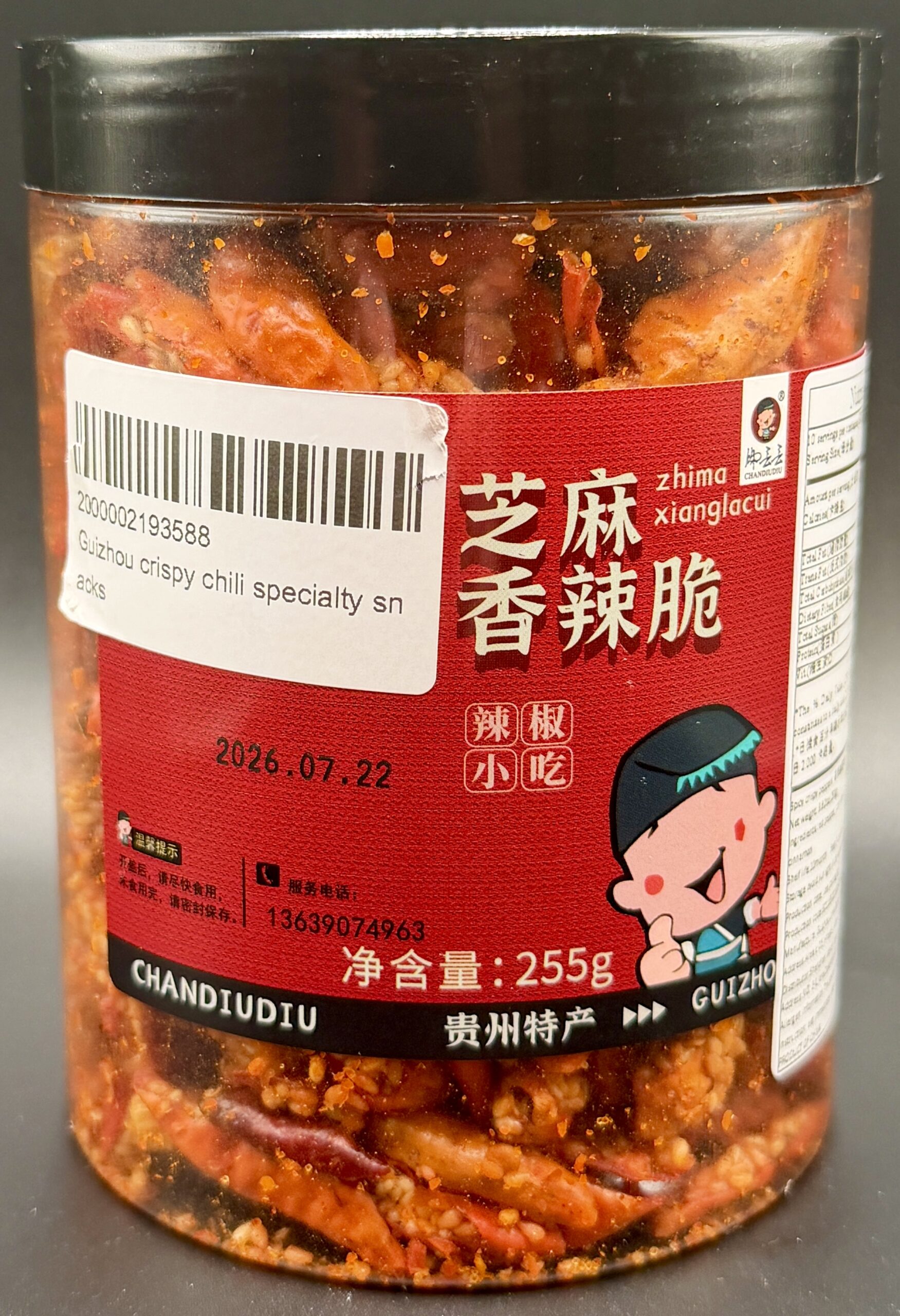
Chandiudiu – Zhima Xianglacui Guizhou Crispy Chili Snack
Bitter: 🟡🟡🟡○○
Salty: 🟡 🟡○○○
Sour/Tangy:🟡🟡○○○
Sweet: 🟡○○○○
Umami: 🟡🟡○○○
Heat: 🟡🟡🟡○○○○○○○
Quick Flavor Notes: Earthy, Sesame, Fruity, Sour
Recommended: Yes
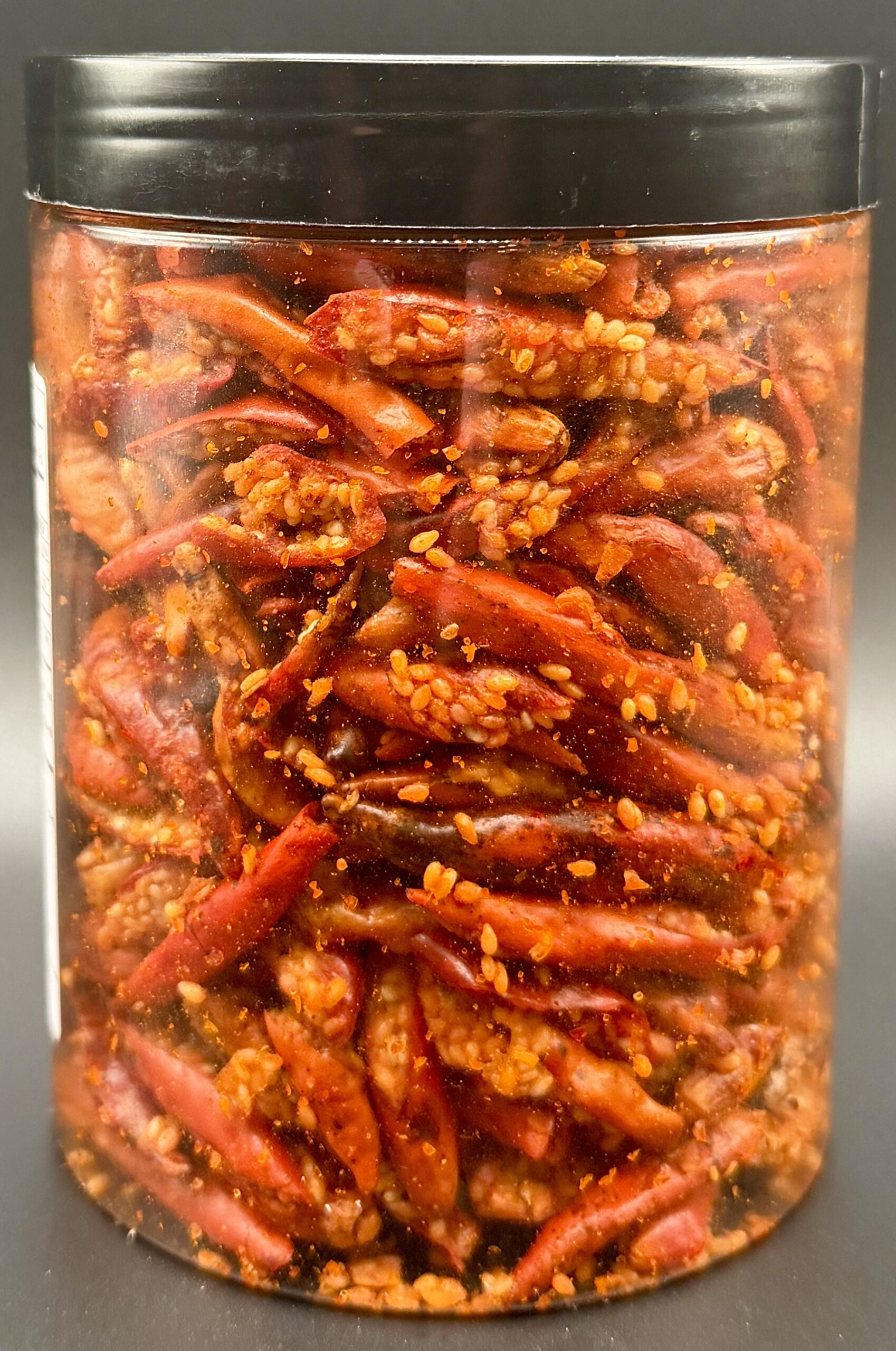
Texture: Crispy and crunchy
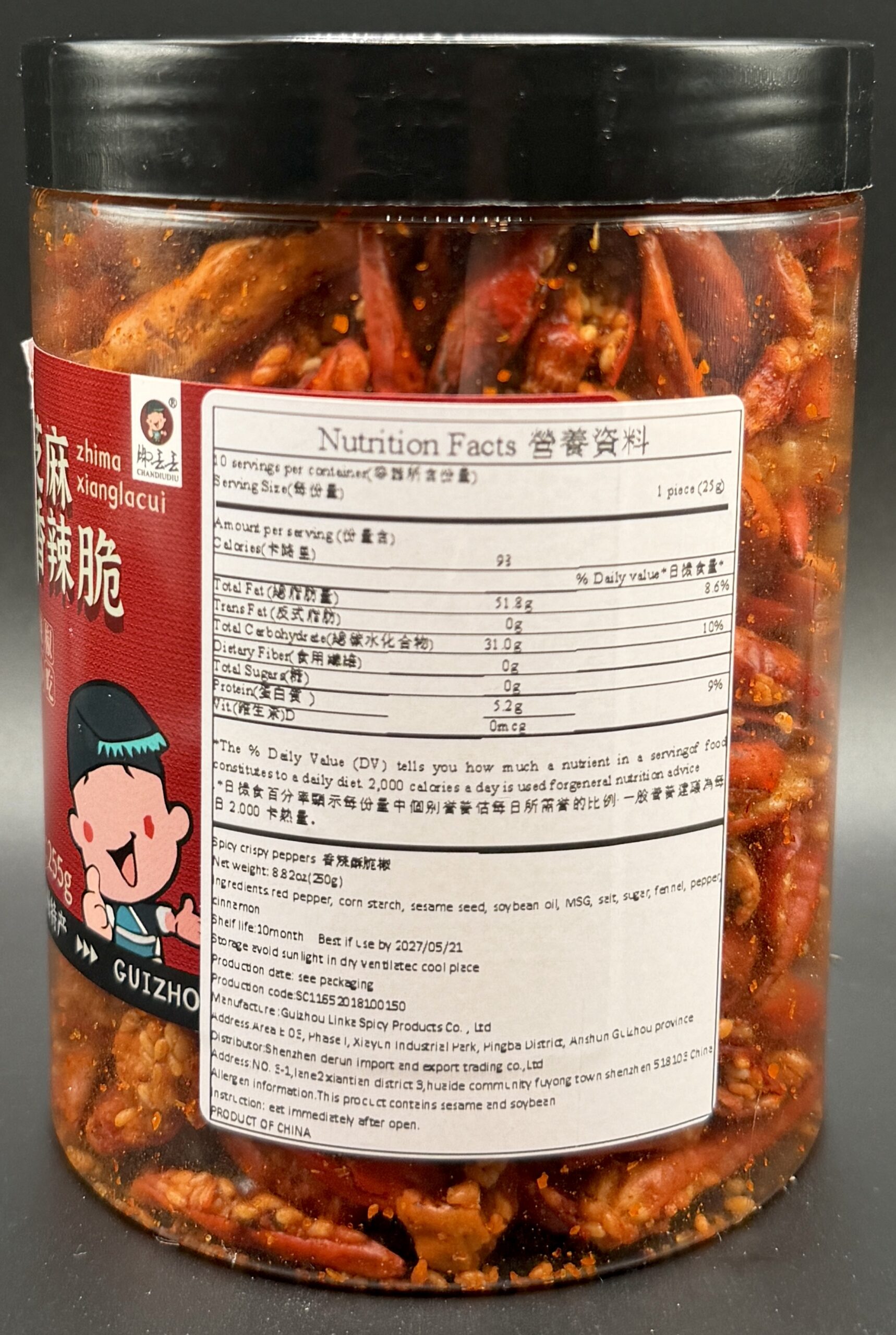
Ingredients: Red Pepper, Corn Starch, Sesame Seed, Soybean Oil, MSG, Salt, Sugar, Fennel, Pepper, Cinnamon
There’s a saying in China that (paraphrased) that the people of Sichuan don’t fear some spiciness, the people of Hunan don’t fear even extreme heat, and the people of Guizhou fear food that isn’t spicy. Those three provinces, along with the Chongqing special administrative region (which is culturally and was previously part of Sichuan province) form the nexus of spicy food in China. While spicy food exists in other regions the farther you get from the Sichuan, Hunan, Guizhou area in Southwest China typically the milder the good becomes. Of the three Guizhou grows by far the most chiles and in fact leads China in production. Guizhou uses chiles in a wide variety of ways including dried, lacto-fermented, fresh, burnt, in oils, in dips, and yes, these, their popular fried chile snack.
Known in (Romanized) Chinese as Zhima Xianglacui or Zhi Xiang La Cui it translates to “fragrant sesame spicy crisp”. While I can’t find the origin of this exact dish Guizhou is considered to be the originator of Chinese chili culture. Traditionally a poor and mountainous region the residents of Guizhou had traditionally grown tea to support the economy and had a diet heavily based on rice and mountain vegetables. One primary thing they lacked was salt. Due to the province’s location sea salt could not be collected and carrying it up the mountain passes proved expensive. Chile peppers, however, were happy to grow in Guizhou’s mountainous soil and their flavor when fresh, dried, burned, or fermented was found by the people to be an excellent replacement for flavoring their food in the absence of salt. These days salt is no longer hard to come by, and during the 20th century the province began to further industrialize and was the founding place and still home of the the world’s most famous brand of chili oil, Lao Gan Ma. Chandiudiu Guizhou style sesame chili crisps have a simple ingredient’s list. Red peppers, starch (to hold the sesame seeds to the chiles and make them extra crispy), oil to fry them in, and a seasoning blend of MSG, salt, sugar, fennel, pepper, and cinnamon. No artificial colors of flavors, just pure chile and sesame goodness.
I will give Chandiudiu credit for how well these are packed. A nice wide-mouth jar and a vacuum seal that sounded like a gunshot when I opened them means that these stayed super dry and crispy. While the frying process does remove quite a bit of heat from the chiles these do have more of a kick than some other similar fried chile snacks I’ve had with a particularly long tail and a heat that builds more over time. Chandiudiu doesn’t elaborate which chiles are used on the label in Guizhou it’s common to use what they call Bullet Chiles which are a type of Facing Heaven Pepper or Chao Tian Jiao. While the facing heaven chile is one of the most famous from the Sichuan region it doesn’t always refer to the same chile as in Guizhou, and in fact even in Guizhou Bullet Chiles and Facing Heaven chiles can be different varieties in different areas of the province, all just having the commonality of growing facing upwards. In addition to the heat these have a complex chile flavor that’s simultaneously earthy, a bit smoky, bitter, and fruity in a way similar to dried fruits such as raisins or prunes. The sesame seeds bring a nutty toasty element as well as some additional texture with a bit of crunch as opposed to the chiles themselves that are more delicate and crispy. These also have a bit of the odd sour taste that I normally associate with Thai chiles. Both are related, so that could be why. The flavors of the cinnamon and fennel are very minor and in the background, dominated by the stronger flavors of the chiles and the sesame.
While the normal way to eat these is just as a snack, and how I normally consume them, these are also quite amazing when added as a crunchy filling into a sandwich. Much as how many people will add potato chips or french fries to a sandwich these can serve the same purpose and up the heat and flavor in the process. I especially enjoyed these in what can be a bit boring otherwise – bacon egg and cheese breakfast sandwiches picked up on the way to work or turkey and cheese sandwiches packed for lunch. I also found that these were quite nice as a crunchy topping put on top of Chinese take-out – sort of like the red chiles sometimes used in those dishes but with these fully edible.
I’m happy to fully recommend Chandiudiu Zhima Xianglacui Guizhou Crispy Chili Snack. They pack more heat