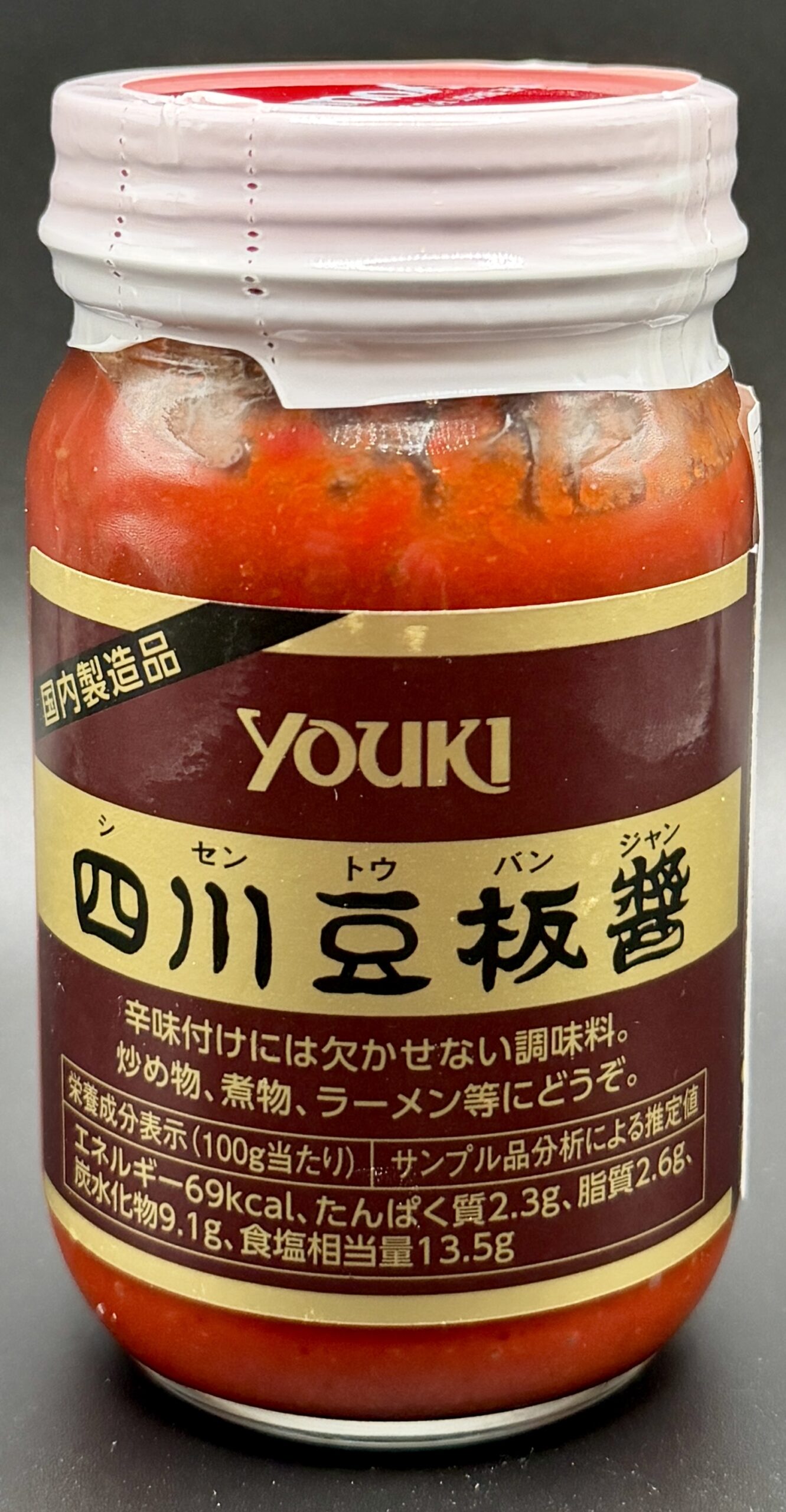
Youki – Shisen Tobanjan
Bitter: 🟡🟡○○○
Salty: 🟡🟡🟡🟡🟡
Sour/Tangy:🟡🟡○○○
Sweet: 🟡○○○○
Umami: 🟡🟡🟡🟡🟡
Heat: 🟡🟡🟡○○○○○○○
Quick Flavor Notes: Salty, Umami, Chile
Recommended: Yes
Texture: Medium-loose chunky paste
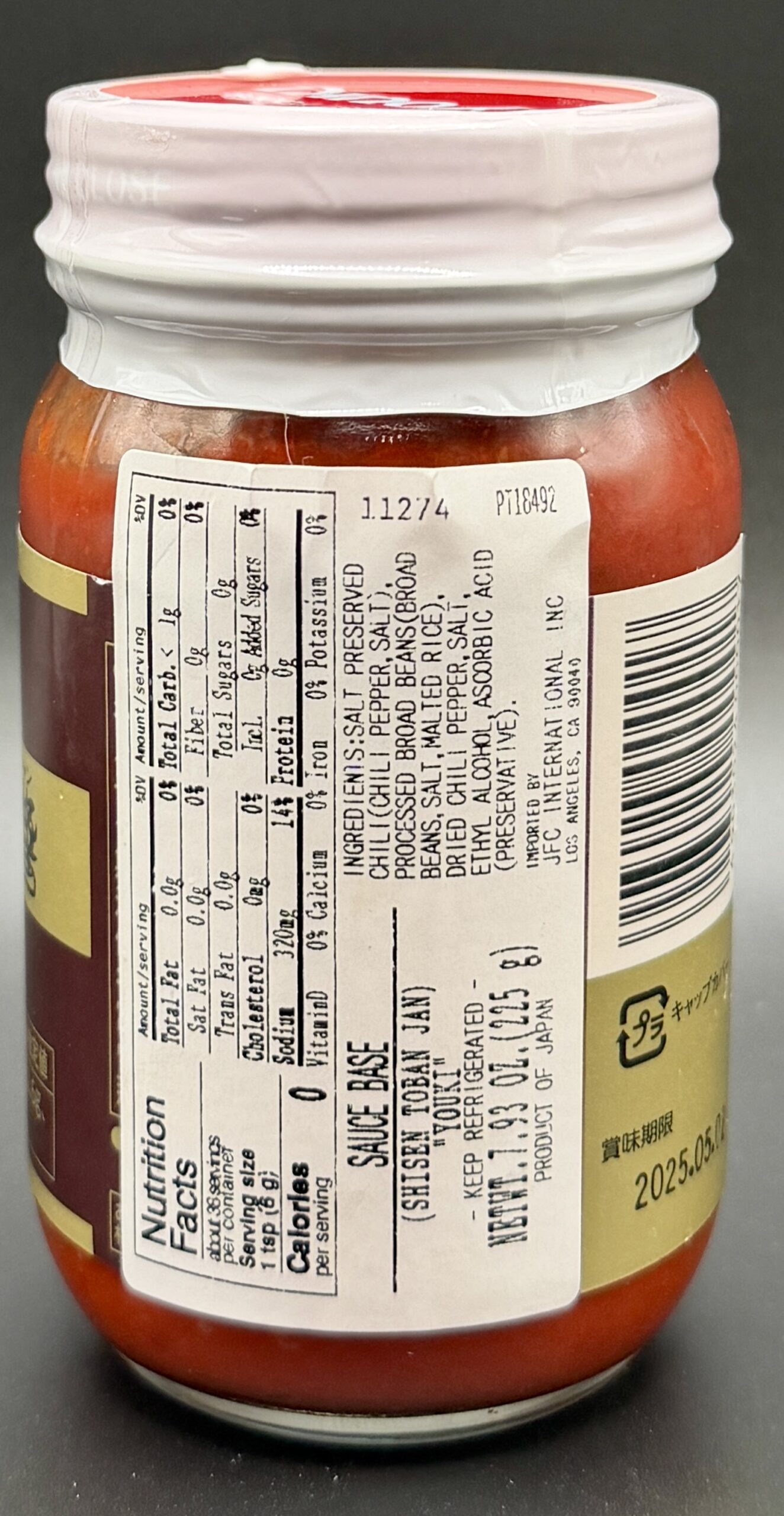
Ingredients: Salt Preserved Chili (Chili Pepper, Salt), Processed Broad Beans (Broad Beans, Salt, Malted Rice), Dried Chili Pepper, Salt, Ethyl Alcohol, Ascorbic Acid (preservative)
The history of Chinese food in Japan is long given the proximity of the nations to each other with many dishes that we consider emblematic of Japan such as ramen and gyoza being adapted from Chinese dishes for Japanese tastes. The real explosion in popularity happened after World War 2 when American food aid in the form of wheat flour combining with Japanese soldiers returning from abroad created demand for more international dishes. In the 1950s a Chinese chef from Sichuan province named Chen Kenmin (who is actually the father of Chen Kenichi, the Iron Chef China in the original Japanese Iron Chef series) immigrated to Japan where he opened a restaurant serving food from his province. Over time he began to adapt the dishes to Japanese tastes and after a series of television appearances he not only became the most famous Chinese chef in Japan at the time but also started the craze amongst the Japanese for Sichuan food.
The Youki brand was founded in Japan in 1974 with this as their first product. Shisen Tobanjan is in fact a Japanese transliteration of the Chinese Sichuan Doubanjiang which is a foundational ingredient in the area’s cuisine. Consisting of fermented broad beans, what we call fava beans in the west, chili, salt, oil, and spices it’s typically wok-fried in a bit of oil as a base to a dish where it provides heat, salt, and a deep powerful umami flavor. Traditional Sichuan doubanjiang is often fermented for years outdoors in clay jars which gives it a dark brown color. While the color becomes a vibrant red when cooked many Japanese found the color unappetizing and thus Youki formulated their Tobanjan to be vibrant red in the jar. The actual ingredients from Youki are on the same page as the Chinse version. Both are made from fermented broad (fava) beans, fermented chile peppers, and salt though doubanjiang typically has wheat flour as a base while Youki tobanjan uses rice instead. The big difference is in the fermentation time. While Chinese doubanjiang is typically fermented for 1-5 years, Youki Tobanjan is fermented for 3-6 months. That results in the brighter color as well as a looser texture that’s more similar to a chile paste or sambal than the thicker paste often seen in Chinese doubanjiang. The aroma of Youki Tobanjan is more chile-forward though there is a distinct deep umami scent beneath.
The shorter fermentation time effects more than the color. Because it’s made in a matter of months instead of years Youki Tobanjan has more of a fresh chile flavor than Chinese versions fermented for years. This is also meant as a cooking ingredient so tasting it straight it is incredibly salty, but the chile flavor comes through as does a very powerful umami taste. I tried this first with some free-form fried noodles. I had some garlic, Thai chiles, ground pork, and an onion I had to use so chopping them all up along with some lo mein noodles and stir frying them with a dollop of Youki Tobanjan (along with some soy sauce, oyster sauce, and Worcestershire sauce) resulted in a dish jam-packed with both chile flavor and satisfying umami goodness. With all of the seasonings being so salty I also didn’t have to add any additional salt to the dish. I tried the Japanese version of mapo tofu next. Inspired by the Sichuan Chinese dish the Japanese version incorporates miso and dashi. Sweeter and milder than the Sichuan version there’s still a nice warmth from the Youki Tobanjan and of course still that deep rich umami flavor. Finally I decided to try something western with this and made some soft scrambled eggs with a dollop of the tobanjan mixed in first. This may become my new favorite way to make eggs as it added a depth of flavor that I’m not used to having plus a nice spice kick that came through with such a simple preparation.
Youki Tobanjan is readily available at my local Asian grocery store and turned out to not only be easy to incorporate into a variety of dishes but also absolutely delicious. The caveat is that it is extremely salty so you have to be careful about how you use it and will need to cut back or eliminate added salt to any dish its used it. With a great umami punch and a nice chile flavor and heat this is very flexible when used in cooking and something anyone who enjoys Asian food or umami should have in their arsenal.