
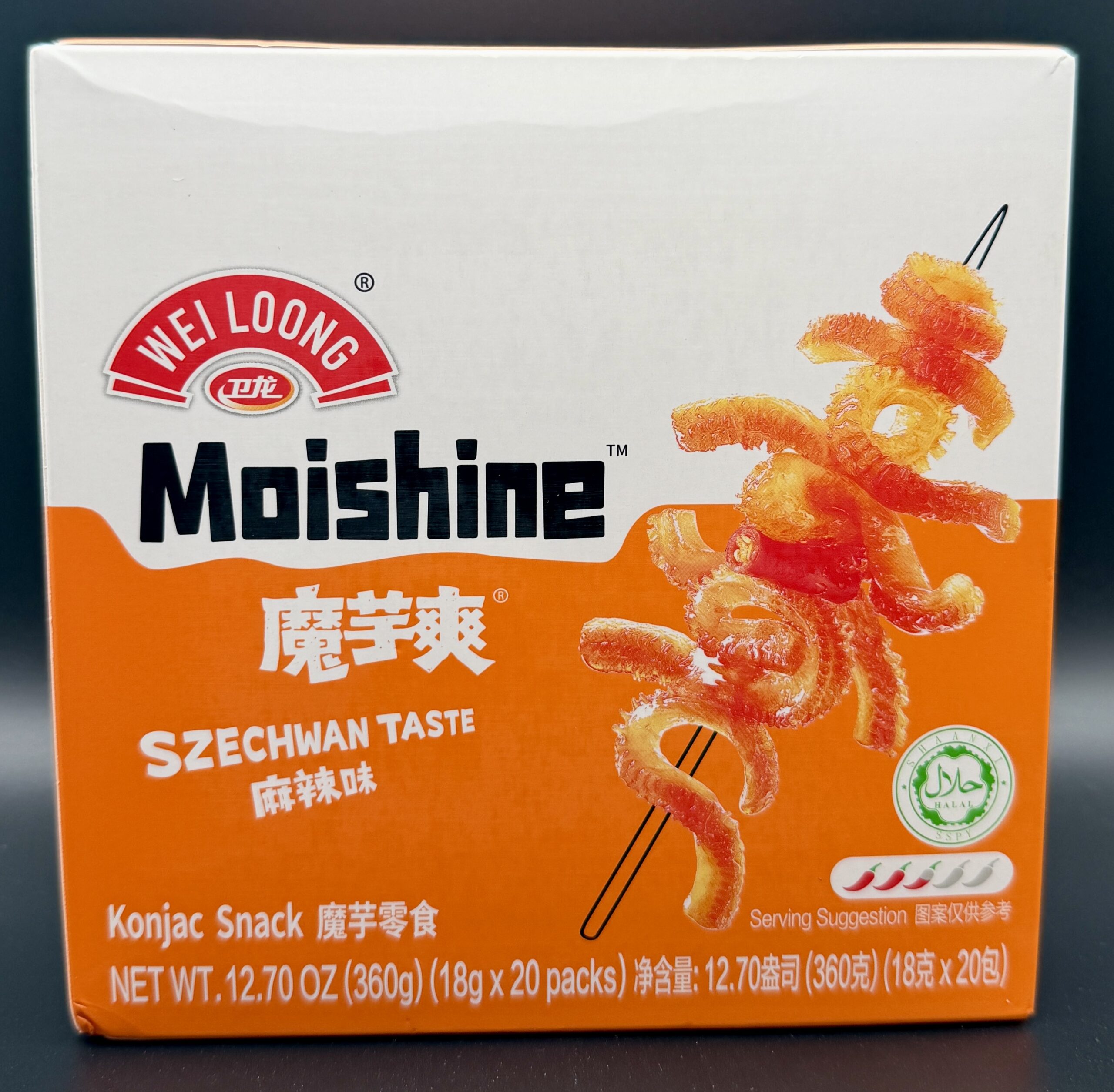
Wei Loong / Weilong Moishine – Szechwan Taste Konjac Snack
Bitter: 🟡🟡○○○
Salty: 🟡🟡🟡🟡🟡
Sour/Tangy:🟡🟡○○○
Sweet: 🟡🟡○○○
Umami: 🟡🟡🟡🟡🟡
Heat: 🟡🟡○○○○○○○○
Quick Flavor Notes: Umami, citrusy, woodsy
Recommended: Yes
Texture: Chewy and crunchy simultaneously
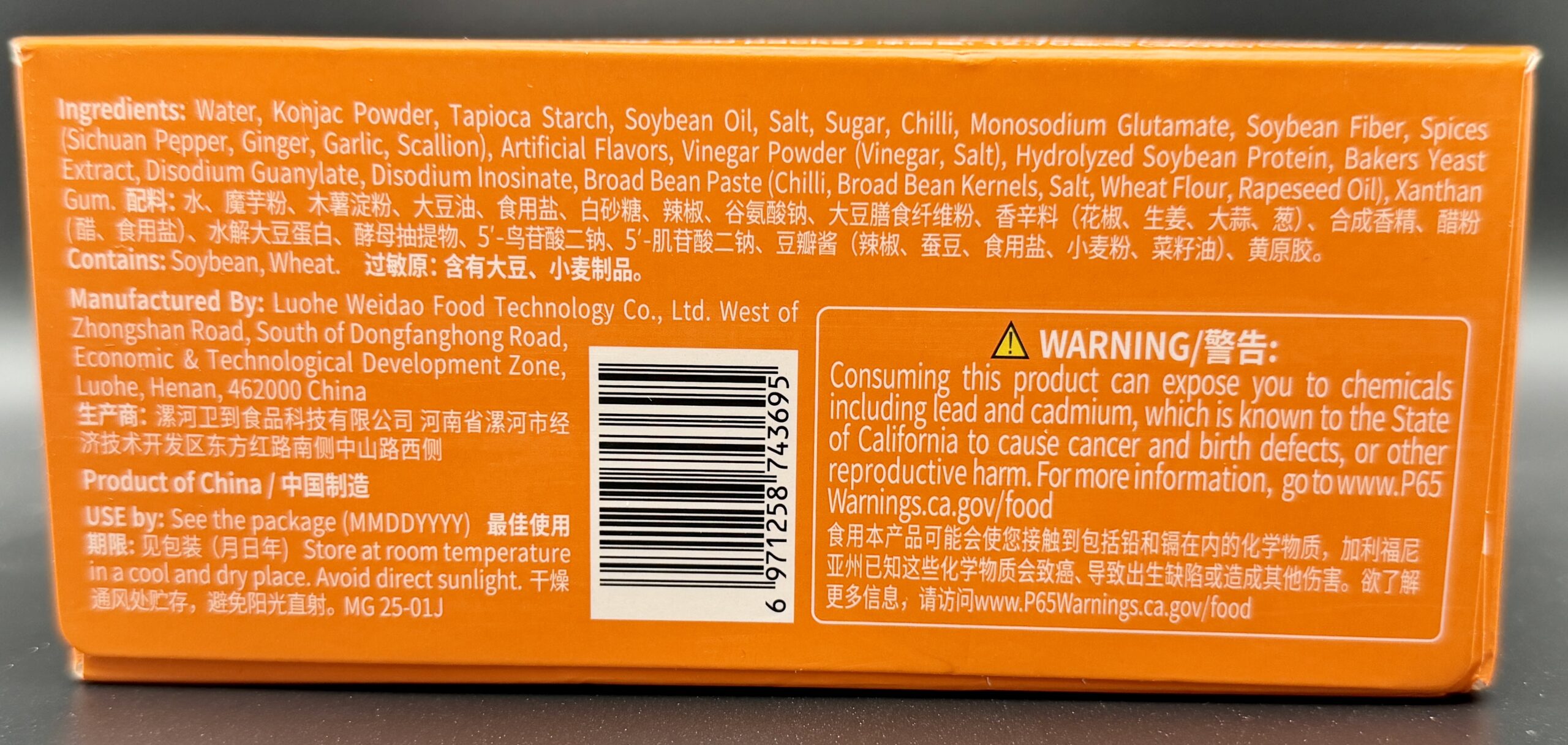
Ingredients: Water, Konjac Powder, Tapioca Starch, Soybean Oil, Salt, Sugar, Chilli, Monosodium Glutamate, Soybean Fiber, Spices (Sichuan Pepper, Ginger, Garlic, Scallion), Artificial Flavors, Vinegar Powder (Vinegar, Salt), Hydrolyzed Soybean Protein, Bakers Yeast Extract, Disodium Guanylate, Disodium Inosinate, Broad Bean Paste (Chilli, Broad Bean Kernels, Salt, Wheat Flour, Rapeseed Oil), Xanthan Gum
Konjac is an interesting plant. Known by multiple aliases such as Devil’s Tongue or Mountain Yam it’s root originally cultivated in southern China and Southeast Asia but has now spread throughout East Asia as well. The root has a long history of being used in Buddhist cuisine as well as helping people fill their stomachs in times of famine but in modern times they’ve been become popular due to their texture and health properties. Pure prepared konjac root is a zero carb zero calorie food. It’s made up of 97% water suspended in 3% of glucomannan, a dietary fiber which your body doesn’t digest. Tied bundles of konjac are popular in Japanese and Chinese hot pots and noodles made from it have shown up in western health food stores for decades.
More recently we’ve seem the launch of these Chinese spicy konjac snacks that first swept Asia starting in the mid-2010s and have now expanded to the west. These snacks became so popular amongst school children in Asia that some schools in Hong Kong, Taiwan, and Thailand banned them due to the potential choking hazard and the high sodium content. Wei Loong, also known as Weilong, originally launched the wildly popular Konjac Shuang line in 2014. More recently they’ve rebranded it as Moishine which is a romanization that more closely matches the Chinese name of their product. The company makes four different flavors – Hot and Spicy, Szechwan Style, Thai Style Hot and Sour, and Peanut and Sesame. This particular example is their Szechwan Style which is supposed to be similar to their Hot and Spicy but with extra Sichuan Peppercorn to give more of numbing sensation and flavor.
In addition to the konjac these use a bevy of umami-rich ingredients. There’s the trio of isolated glutamates – monosodium glutamate (MSG) as well as the complimentary boosters of disodium guanylate and disodium inosinate plus hydrolyzed soy protein which is a precursor to chemically produced soy sauce and is often used in processed foods to give an umami boost. These also use yeast extract, another umami rich ingredient that’s often found in vegan foods and which gives a naturally meaty rich flavor. The spice mix consists of Sichuan peppercorns, ginger, garlic, and scallions but the flavor of these is also boosted by what the label lists as Broad Bean Paste. This paste, also known as doubanjiang, is the heart and soul of Sichuan cooking even more than the eponymous peppercorns. Made from broad beans (more commonly known as fava beans in the west), chile peppers, wheat, and oil it’s traditionally fermented for years to develop a rich umami flavor that compliments its spice.
Texturally these are a little bit less chewy and gelatinous than pure konjac jelly as they do contain some tapioca starch and soy fiber as well. They still have excellent chew to them and the closest western equivalent I could give to them would be sweated but still al dente onions, though these are chewier than those. The Sichuan peppercorn flavor is strong and at the forefront. It’s citrusy yet woodsy and piney all at the same time, similar to cedar with exotic citrus zest and a slight metallic flavor that comes from the numbing sensation. While these aren’t as numbing as something like the 50Hertz Tingly Peanuts they still have the effect especially if you eat two packs right after one another. Underneath that Sichuan peppercorn flavor there is a deep rich meaty taste. Despite these being vegan the bevy of umami ingredients gives the impression that these have been stewed in a non-specific animal stock which is very satisfying. The garlic and onion (or well, scallion) add to that meaty flavor as those ingredients are typically paired with meats and the ginger adds some freshness and a different kind of spice. These also include vinegar powder which adds a nice amount of tanginess to offset all of the rich umami flavors. The chile flavor is more subtle than the others. You can taste a bit of dried-fruit style dried chile taste in the very background but the chiles do make themselves known more in the heat. While not super hot, or even hot for that matter, these do give that characteristic mala numbing and spicy sensation where your lips and tongue go both numb and have a bit of chile burn.
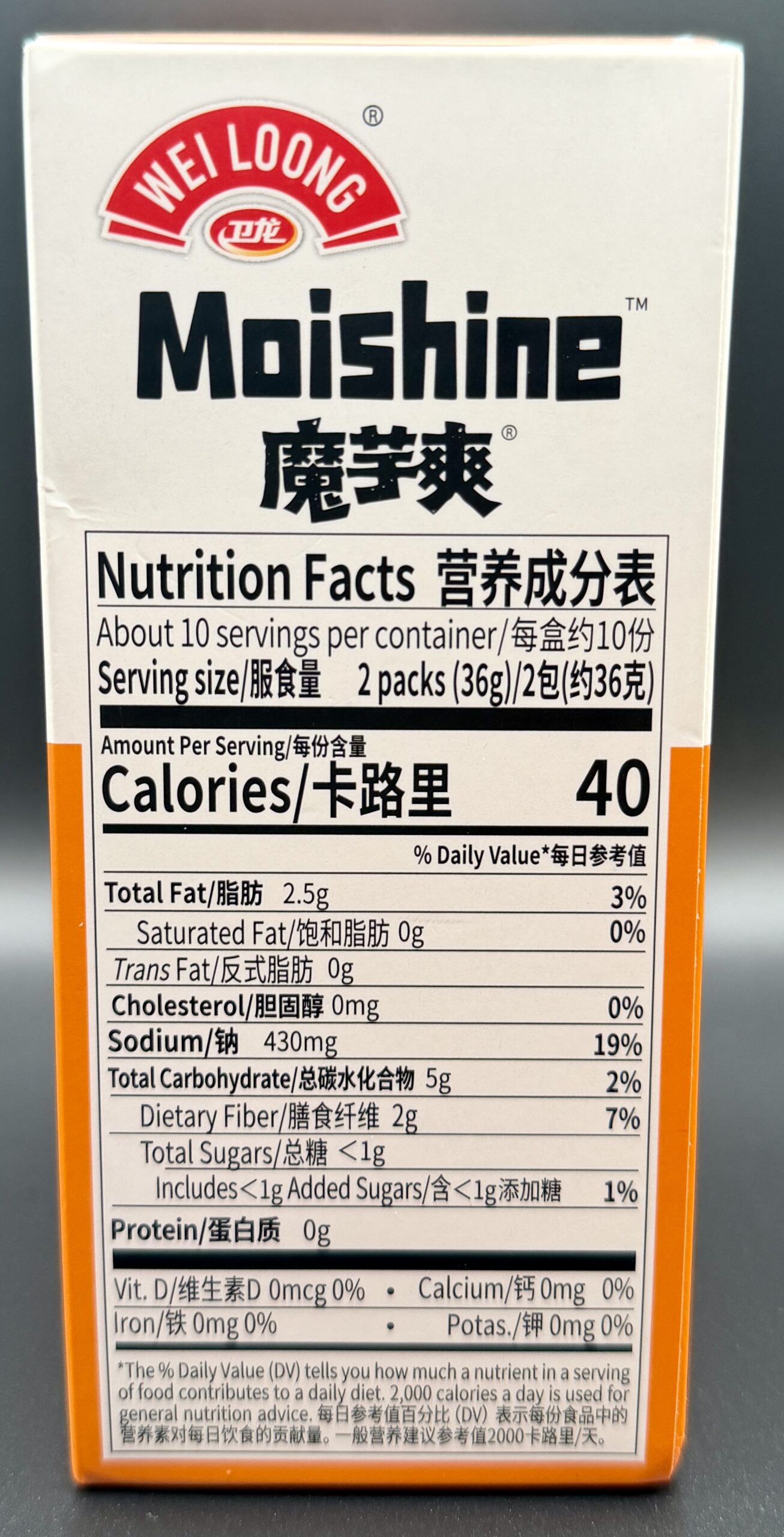
Speaking of eating two packs (or more) in a row, the serving size of these is two packs and for that they’re remarkably healthy in a number of ways (as long as you’re not on a sodium restricted diet). While these aren’t zero calorie nor zero carb as they contain ingredients other than just the konjac two packets contain only 40 calories and three net carbs. Those two packets also unfortunately contain 430mg of sodium, almost 20% of the daily recommended intake. Still as a quick snack these are quite delicious and I’m happy to recommend them. I’m also excited to try their other flavors to see how much they differ in overall taste. If you enjoy Asian snacks and like something with a unique texture and flavor profile these are absolutely worth picking up.



2 Comments